
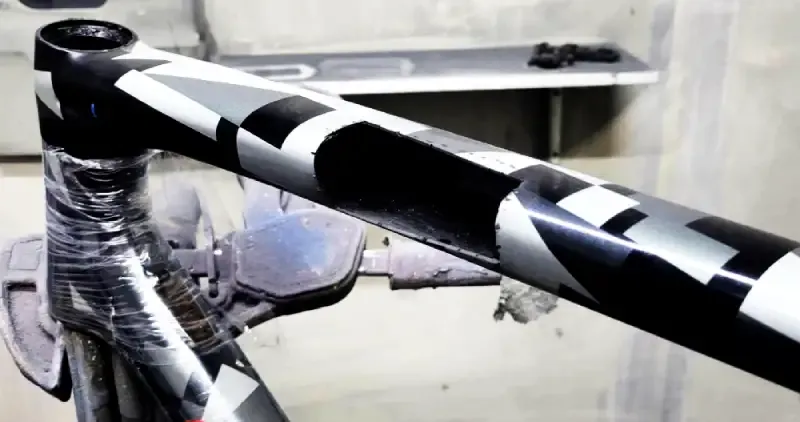
Structural Crack in a Carbon Bike Frame
This is part of our Carbon Fiber Damage Encyclopedia, a complete guide to identifying and understanding the most common types of carbon frame damage.
A structural crack means carbon fibers and laminate continuity may be compromised. This is different from cosmetic issues like paint or clearcoat cracking. The key safety factors are the location of the damage, its severity, and whether the frame’s integrity is verified before you ride again.
Direct answer: A structural crack is a physical break in the carbon composite layers that can interrupt the frame’s load path. Treat it as a stop-ride issue until a qualified inspection clarifies the extent of the damage. Verification helps determine whether repair is appropriate or whether replacement is the safer choice.
What a Structural Crack Is
A structural crack occurs when carbon fibers fracture or the laminate structure is disrupted. Carbon composites rely on continuous fibers and bonded layers to distribute stress. When that continuity is compromised, the frame may no longer carry loads the way it was designed to.
This matters because composites do not behave like metal. A metal frame may bend or dent before it fails. A carbon structure with damaged fibers or separated layers can fail more suddenly, especially under repeated load.
What It Looks Like
You cannot diagnose structural integrity by appearance alone, but these cues can be more consistent with structural damage:
- A cleaner fracture line rather than a spiderweb finish pattern
- A crease, kink, or localized distortion in the tube’s shape
- Visible composite disruption such as exposed fibers or a sharp break edge in the finish
Keep in mind that the visible crack can understate the internal damage zone.
How It Happens
Structural cracks typically follow events that exceed the laminate’s design limits:
- Crash impacts, including bar or lever contact with the frame
- Rock strikes, especially on the underside of the downtube
- Transport or rack damage, including crushing forces or impact in transit
- Crush events from high localized force applied to a tube
Risk Level (and what raises it)
Assume risk is high until proven otherwise. Risk increases when the crack is near high-load zones and complex junctions such as the headtube, bottom bracket area, or dropouts. Symptoms like new creaks or handling changes are also meaningful, since they can indicate movement in a damaged structure or interface.
What It Can Mean Underneath
A visible crack can be the outer sign of a larger internal damage area. Impacts can create surrounding delamination (layer separation) or internal bruising that does not show clearly through paint. This is why mapping the extent of damage is important before deciding on repair versus replacement.
Structural Crack vs Paint Crack
| Sign | More consistent with paint or finish crack | More concerning for structural crack |
|---|---|---|
| Pattern | Spiderweb, crazing, shallow lines | Cleaner line, jagged split, localized crease |
| Context | Appears gradually over time | Appears after a crash, drop, strike, or crush event |
| Symptoms | No new noises or handling change | New creaks, soft spot, handling change |
This comparison provides context, not certainty. Verification is what reduces uncertainty when safety is the priority. If your damage looks more like the left column, see our guide on surface cracks.
What to Do Next
If you suspect a structural crack, follow a simple decision path:
- Stop riding. Do not “test it.”
- Document context. Note what happened and where the crack is located.
- Get inspected and verified. The goal is to understand the extent and location of damage. Ultrasound inspection is one of the most reliable methods.
- Decide repair vs replacement based on the inspection findings and the zone involved.
Typical Repair Approach
A typical structural repair plan starts with identifying the full damage zone, then removing compromised material and rebuilding the laminate to restore continuity in that area. After curing, the finish can be restored to match the surrounding paint if desired. The most important part is ensuring the repair is appropriate for the location and that the result is verified before hard riding.
When Replacement Is Smarter
Replacement is often recommended when damage involves high-consequence areas or when structural certainty is difficult to achieve, such as:
- Critical interfaces or high-load junctions (for example, areas around the fork and headtube, bottom bracket, or dropouts), depending on extent
- Compromised alignment or damage that extends beyond a localized zone
- Widespread damage, multiple damaged areas, or unknown prior repairs in a critical zone
Related Resources
- Carbon Fiber Damage Encyclopedia: The complete guide to all carbon damage types
- Ultrasound inspection for carbon frames: How we verify what’s beneath the surface
- Carbon fiber bicycle repair: Our full service overview