
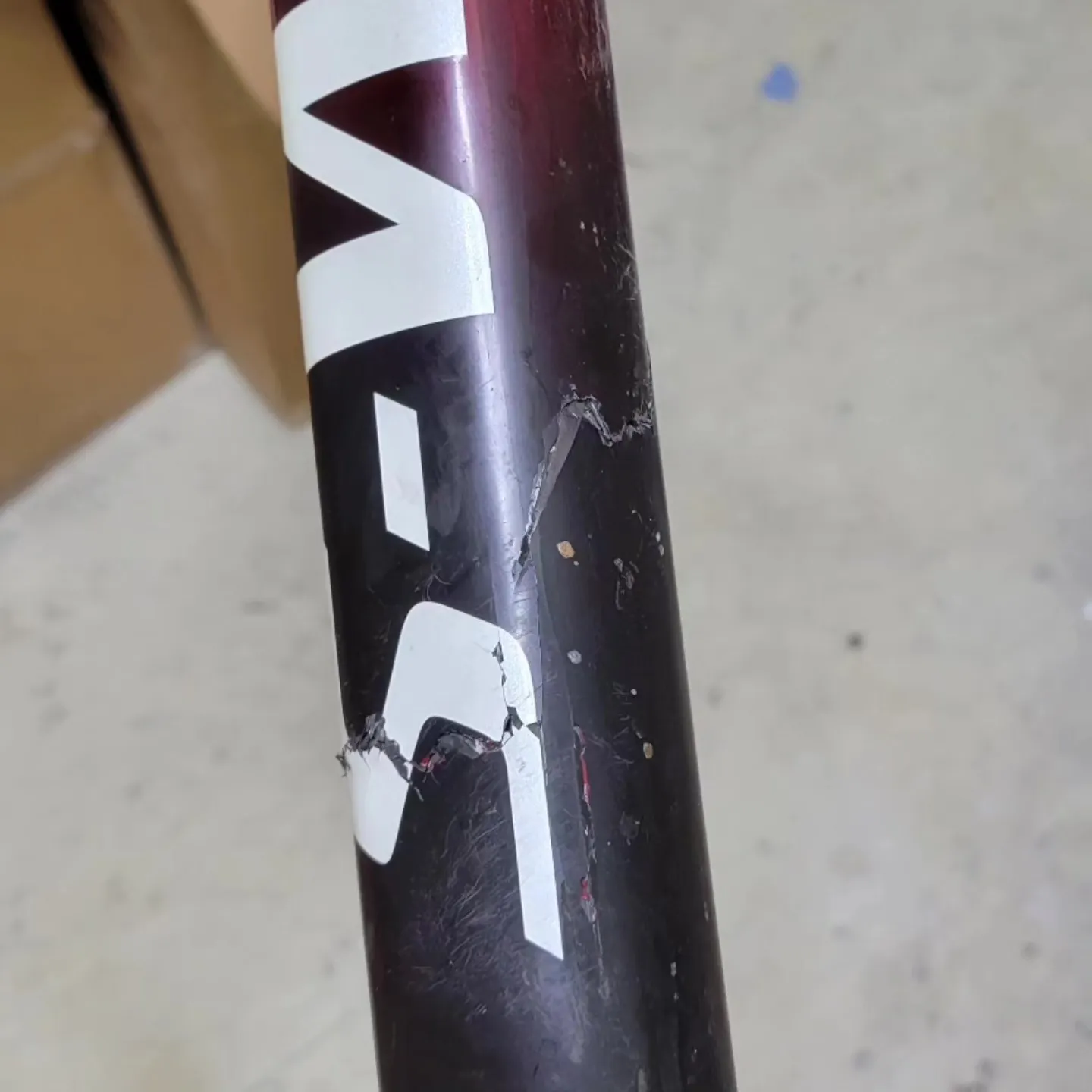
Surface Crack on a Carbon Bike (Paint or Clearcoat)
This is part of our Carbon Fiber Damage Encyclopedia, a complete guide to identifying and understanding the most common types of carbon frame damage.
A surface crack often affects paint or clearcoat, not the carbon structure. The challenge is that some structural problems can hide under a finish that looks fine. This guide explains what surface cracks look like, what they usually mean, and when verification is the smart next step.
Direct answer: A surface crack is typically a finish-level defect until proven otherwise. Visual inspection is useful, but it cannot always confirm the structure underneath is sound. The key decision is whether the flaw is purely cosmetic or whether it should be verified to rule out hidden impact damage.
What a Surface Crack Is
A surface crack is a defect limited to the outer aesthetic layers of your frame. It occurs in the paint, clearcoat, or primer and does not necessarily reach the structural fibers.
Carbon frames flex slightly under load. Paint and clearcoat are often more brittle than the composite beneath. When the frame moves and the finish cannot stretch enough, the finish can crack even if the carbon remains intact.
What It Looks Like
Surface cracks often show up as patterns that look dramatic but may be limited to the finish:
- Spiderwebbing or crazing that resembles shattered glass
- Fine hairline cracks near tube junctions
- Edge flaking around fittings, cable stops, or decals
- Chips that remove paint but do not expose raw carbon fibers
Appearance alone is not definitive, especially after an impact.
How It Happens
Clearcoat or paint cracking can happen without a crash, especially over time:
- Normal frame flex and vibration from riding
- Temperature swings that expand and contract materials
- Thick paint or clearcoat that cannot flex with the frame
- Local stress around fittings like bottle bosses and cable stops
- Minor knocks or abrasion during transport or storage
- Variations in repaint thickness or material compatibility
Common Locations
These cosmetic flaws often appear in high-stress or high-contact areas:
- Tube junctions where layups and stiffness change
- Edges around bottle cage bosses and cable ports
- Areas that see frequent contact or clamp pressure (for example, contact points near accessories or mounting hardware)
What It Can Mean Underneath
In many cases, a surface crack is cosmetic. It reflects stress in the finish, not a failure of the frame.
Sometimes, a finish crack can also be a clue that something happened underneath. An impact can create internal damage that is not obvious from the outside. That is why verification is often recommended after meaningful impacts or when new symptoms appear.
Surface Crack vs Structural Crack
| Sign | More consistent with surface crack | More concerning for structural damage |
|---|---|---|
| Pattern | Crazing, spiderweb, shallow lines | Cleaner fracture line, crease, localized break |
| Context | Appears gradually, often near thicker finish | Appears right after impact or with new symptoms |
| Symptoms | No new noises or handling change | New creaks, soft spot, handling change |
This table is only a guide. When safety is the priority, verification is what reduces uncertainty. If you’re seeing signs that lean toward the right column, read our guide on structural cracks in carbon frames.
What to Do Next
- If the bike took a meaningful impact or you notice new noises or handling changes, stop riding and get it inspected.
- If the mark appears cosmetic and stable with no symptoms, you can monitor it and decide whether cosmetic restoration is worth it.
- If you are unsure, verification provides confidence before you ride hard again.
Typical Repair Approach
The first priority is confirming the structure is sound. If the issue is cosmetic, options range from localized touch-up to blending and full finish matching. If verification indicates underlying structural damage, the structure should be addressed before any cosmetic restoration.
When Replacement Is Smarter
Replacement is typically recommended only if inspection shows deeper structural damage in a critical zone that is not a safe candidate for repair, or if there is widespread underlying damage that is not cost-effective to address.
Related Resources
- Carbon Fiber Damage Encyclopedia: The complete guide to all carbon damage types
- Ultrasound inspection for carbon frames: How we verify what’s beneath the surface
- Carbon fiber bicycle repair: Our full service overview